If you’re running a warehouse, construction site, or even a small retail storage space, you know manual stackers are those workhorses that move heavy pallets around without breaking the bank. But like any tool, they can glitch out when you least expect it—and nothing kills your workflow faster than a dead stacker mid-load. I’ve been supplying manual stackers for over 10 years, and let’s be real, I’ve seen every dumb, annoying, avoidable issue pop up. Today, I’m breaking down the fixes I tell every new customer so you don’t have to call me at 8 p.m. panicking because your stacker won’t lift a single box. Manual Stackers
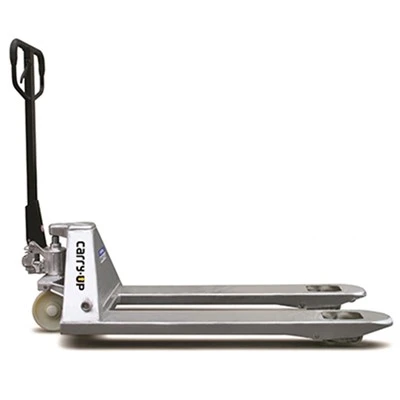
First, let’s get one thing straight: most manual stacker problems aren’t “I need to buy a new machine” issues. 9 times out of 10, it’s a tiny, easy fix you can do in 5 minutes with a basic toolbox. I’m not talking about major hydraulic leaks that require a tech—we’ll save that for the rare cases. Let’s start with the most common headache that comes in first thing Monday morning: the stacker won’t lift at all.
I see this all the time: a customer calls, screaming that their stacker won’t budge up, and half the time it’s the hydraulic release valve. That little knob or lever under the handle? If it’s twisted open (or not twisted closed all the way), all the hydraulic fluid seeps right back down into the reservoir, so the jack can’t build pressure. Duh! I had a guy last month who thought his stacker was broken because he forgot to twist that lever clockwise until it clicked. Next, check the hydraulic fluid level. If you haven’t topped it up in months, the fluid got low enough that there’s air in the lines—air is the enemy here. Don’t overfill it, either—follow the max line etched on the reservoir, usually right near the fill cap. If you go too high, the pressure will blow a seal faster than you can say “pallet jack.” Another quick check here: make sure the lift chain isn’t tangled or rusted. A kinked chain stops the forks from moving smooth. Just give it a quick lube with heavy-duty oil, yank it loose, and you’re golden.
Now, what if the stacker lifts fine, but when you move it, it’s wobbly, or the forks tilt forward like they’re gonna dump the load? That’s usually a balance issue, not a machine defect. First, check the load itself—are you trying to stack 2,000 lbs on a stacker rated for 1,500? I get it, you wanna save a trip, but overloading is the #1 reason for bent forks or warped frames. That’s not just dangerous, that’s a quick way to ruin a $500 machine. Next, look at the stabilizer legs (the big, wide ones on the base). If they’re not fully extended, or one is stuck, the whole thing is off-balance. Most people don’t even notice—they roll the stacker with the legs half-folded, and boom, wobbly. Give each leg a little tap to make sure they lock into place, no matter how small the load. Oh, and check the fork spacing. If the forks are too narrow for your pallets, they’ll tip too. Most manual stackers have adjustable forks—just loosen the side bolts, slide ‘em to match your pallet’s notches, and retighten. Easy.
Another common one: the stacker won’t roll straight, or the wheels squeal so loud they scare off the dogs. Let’s start with the wheels. If the front load wheels (the ones touching the ground under the forks) are caked with dirt, mud, or old pallet resin, they get stuck. Clean ‘em off with a rag, maybe a little degreaser if it’s gross. If one wheel is bent or has a flat spot (that happens when you run over a nail or a loose board), replace it—they’re like $10 each, way cheaper than a new stacker. The squeal? Almost always a lack of lube. The wheel bearings need a little grease every few months. I tell customers to mark their calendars for lube every 3 months, or after a big job on a dirty site. Last week, a customer fixed a 2-year-old squeal by just popping the wheel off and squirting a little grease in the bearing. Game changer.
What if your stacker leaks hydraulic fluid? That’s the scary one, but it’s usually not a big deal if it’s a small drip. First, where’s the leak coming from? If it’s from the hoses, check for loose connections. Tighten the fitting with a wrench—don’t overdo it, you’ll crack the hose. If it’s from the seal on the ram (the big metal pole that lifts the forks), the seal might be worn. You can buy a hydraulic seal kit for like $15 on Amazon, and it’s super easy to replace—just drain the fluid, remove the old seal, pop the new one in, refill. If it’s a big leak from the reservoir, stop using it until you check the level—you probably had a crack from overfilling, which I mentioned earlier. Don’t ignore leaks, though—low hydraulic fluid will cause lift issues, even if it’s just a tiny drip.
Wait, what about when the handle feels loose, or it wobbles when you’re lifting? That’s usually a loose bolt on the handle assembly. The handle takes a lot of force every time you lift, so bolts can work their way loose over time. Grab a wrench and check all the bolts connecting the handle to the frame—tighten ‘em up, and that wobble will be gone. Also, check the pivot point where the handle bends, if your stacker has that. A little grease there goes a long way, prevents that stiff, hard-to-push handle.
Now, let’s talk about what NOT to do. Don’t use a manual stacker for things it’s not made for. I see guys use ‘em to pull heavy carts, or lift people (don’t laugh, I’ve seen that too). That’s a surefire way to bend the frame or break the hydraulic system. Also, don’t skip maintenance. A lot of people think “it works, no need to clean it,” but dirt and rust build up faster than you think. Every 6 months, take 10 minutes to clean the forks, check the chains, lube the wheels, and top up the hydraulic fluid. It’ll double the life of your stacker, I promise.
And hey, if you try all these fixes and it’s still not working? No sweat. I’ve been in this game long enough to know when a problem needs a professional, not a DIY fix. But most of the time, 9 out of 10 issues are the tiny, avoidable ones I listed above.
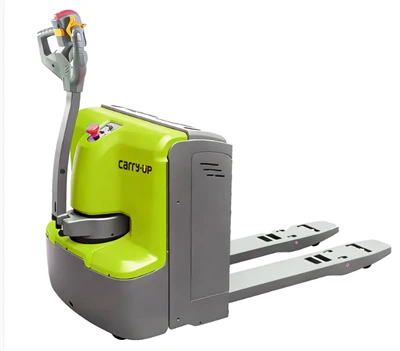
If you’re in the market for a new manual stacker, or you have a broken one you can’t fix, hit me up. I’ve got options for every size, every load, every budget—no fluff, just solid machines that last. We can chat about your specific needs, walk you through any fixes, or get a replacement out to you fast. Don’t waste time stressing over a broken stacker, let’s get you back to moving pallets.
Tractors References:
- Industrial Truck Association. (2022). Maintenance Guidelines for Manual Material Handling Equipment.
- Material Handling Industry Association. (2021). Troubleshooting Common Manual Stacker Malfunctions.
- Global Equipment Supply. (2023). Best Practices for Manual Stacker Operation and Care.
Hangzhou Carry Equipment Co., Ltd.
Hangzhou Carry Equipment Co., Ltd. is one of the most professional manual stackers manufacturers and suppliers in China, also supports customized service. Please feel free to buy advanced manual stackers for sale here and get quotation from our factory. For price consultation, contact us.
Address: No.360 Tongxiang Rd., Yinzhou Economic Development Zone, Yinzhou Dist., Ningbo, China
E-mail: Sales@carryupmhe.com
WebSite: https://www.carrymhe.com/
