If you’ve ever spent time around underground mining operations, you know heat isn’t just an uncomfortable nuisance—it’s a leading cause of safety incidents, reduced productivity, and even long-term health risks for operators. That’s where our Mining Underground Heat Disaster Treatment Units (MHDUs) come in. We design systems specifically to manage high temperatures, humidity, and trapped heat in deep mining spaces, but here’s the thing: a state-of-the-art unit means nothing if the people operating it don’t have the right training. Over the years, we’ve worked with dozens of mines across North America, and one of the most common gaps we see isn’t in equipment performance—it’s in operator preparation. Today, I’m breaking down exactly what that training entails, from mandatory certifications to on-the-job practical experience, and why getting it right is non-negotiable. Mining Underground Heat Disaster Treatment Unit
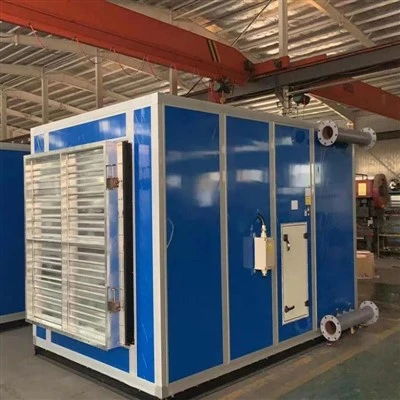
Let’s start with the basics. MHDUs aren’t your standard mining equipment. They’re complex systems—often combining refrigeration units, air circulation controls, heat exchangers, and real-time monitoring sensors all tailored to underground conditions. Unlike surface machinery, underground work means limited space, constant dust, high humidity, and potential pressure shifts, all of which can impact how an MHDU functions. Operators can’t just read a manual and show up. The first pillar of their training is foundational technical safety, and it’s non-negotiable: they need a valid underground mining safety certification specific to their region. In the U.S., that means meeting Mine Safety and Health Administration (MSHA) Part 46 or Part 48 requirements, depending on their role, while in Canada it’s the Mine Safety and Health Association (MSHA) of Canada or provincial equivalents like Ontario’s Mine Safety and Health Awareness Training (MSHAT). These certifications cover core underground risks—falling debris, gas exposure, confined space entry, emergency response—all of which directly tie to operating an MHDU in a high-stress environment. We won’t even sell a unit to a mine until we confirm their operators have this base; without it, any advanced training is useless.
Next, there’s specialized training for MHDU-specific equipment. This is where our team steps in, because no two MHDU builds are identical. Every mine has unique heat profiles—some deal with hot rock layers at 1,200 meters depth, others with high humidity from water seepage, some need mobile units for temporary projects while others require fixed, integrated systems. Our training for operators is hands-on, not just classroom work, and it covers every component of the unit. First, we teach core system design and function: operators learn how refrigeration loops work, how heat is transferred from underground air to a coolant stream, and how the unit interacts with the mine’s existing ventilation system. That last part is critical—many new operators don’t realize that an MHDU doesn’t work in isolation. If the mine’s ventilation fans are off by 10%, the MHDU’s efficiency drops by 25%, and even minor adjustments can throw off the entire heat management network. We walk them through how to map the unit to their mine’s ventilation schematic, test airflow rates, and adjust controls to align with daily production changes.
Then comes hands-on troubleshooting, a skill that separates safe operators from those who cause downtime. Underground, equipment doesn’t fail on a schedule—hoses can clog with coal dust, sensors can glitch from moisture, or a compressor can overheat after a long shift. Our training simulates common real-world faults: we’ll block a heat exchanger to mimic dust buildup, disable a temperature sensor to test how operators respond to incorrect data, or simulate a power fluctuation to show how the unit’s backup systems engage. We don’t just tell operators “check the filter”; we teach them how to diagnose the root cause. For example, if the unit’s output temperature spikes, a new operator might just increase the cooling, but an experienced one will check if the ductwork has a leak, if the mine’s fresh air intake is restricted, or if the compressor is low on refrigerant. We also train them on emergency shutdown protocols specific to MHDUs—what to do if a refrigerant leak is detected, how to isolate the unit without disrupting mine operations, and how to coordinate with mine safety teams during a heat-related incident. This part takes at least 80% of our two-day on-site training, because practice is the only way to prepare for a moment when every second counts.
Another often-overlooked part of training is heat stress management itself, for both the operator and the people they’re protecting. MHDU operators work in the same high-heat environment as the miners they’re supporting, so they need to recognize their own limits too. We teach them to monitor their own core body temperature, identify early signs of heat exhaustion (dizziness, excessive sweating, rapid heartbeat), and take proper rest breaks. More importantly, they learn how to use the unit’s data to keep crews safe: how to read real-time temperature and humidity readings in different mine sections, adjust the MHDU’s output to match shift schedules, and alert mine managers if a section is approaching unsafe levels. Last year, we had a mine in Wyoming where an operator noticed a sensor reading a 2.8°C spike in a production section an hour before the shift ended. Instead of waiting for the next check, they adjusted the MHDU’s airflow to that section, preventing two potential heat-related incidents. That’s the kind of skill that doesn’t come from a manual—it comes from training that ties the equipment to the people it’s there to protect.
We also emphasize regulatory compliance training, because mining heat management is governed by strict global standards. The International Organization for Standardization (ISO) has specific guidelines for underground heat stress, ISO 16853, which outlines acceptable temperature limits and heat mitigation equipment performance. Many local regulators adopt these standards, so operators need to know how to document their MHDU’s performance, track heat levels across the mine, and report any deviations to safety teams. For example, in Australia, the Mine Safety Plan (MSP) requires detailed records of heat stress controls, and operators need to be trained to maintain accurate logs of MHDU run times, temperature readings, and maintenance checks. Our training includes a module on these requirements, because a unit that meets ISO standards means nothing if operators don’t know how to maintain the required documentation. We’ve had clients who thought their operator training was complete, only to find out they missed this part and had to redo 6 months of safety audits—costing them thousands in downtime.
Practical experience rounds out the training, right? We don’t just walk operators through a simulation and send them back to work. We pair each new operator with a seasoned trainer for a 4-week on-the-job mentorship period, where they shadow experienced operators during day, night, and weekend shifts (since mining runs around the clock, MHDUs rarely shut down). This mentorship covers what you can’t learn in a classroom: how dust clogs sensors faster on long shifts, how to adjust the unit when the mine’s water supply is low, how to coordinate with electricians during power maintenance without shutting down the MHDU. At the end of this period, the mentee and trainer sign off on a competency assessment, confirming they can operate, maintain, and troubleshoot the unit safely. We’ve found that operators who complete this mentorship are 30% less likely to make operational errors in their first 6 months on the job, which saves mines tens of thousands in unplanned maintenance and safety incidents.
Now, let’s talk about why this matters for you, the mine operator. A well-trained MHDU operator doesn’t just keep the unit running—they extend its lifespan. Properly maintained, our units last 10+ years, but poor operation can cut that down to 5 or less. We’ve had clients who skipped full training, only to have a compressor fail prematurely because an operator didn’t drain the condensate line regularly, causing water damage to the motor. That’s a $20,000 repair that could have been avoided with simple training. Beyond that, safe operators reduce downtime: when the MHDU is running at peak efficiency, production stays consistent, and miners stay on shift without taking unplanned heat-related breaks. A 2022 study by the National Mining Association found that mines with properly trained heat management operators had 22% fewer safety incidents and 15% higher production rates in high-heat sections than those without.
Here’s the thing: we don’t just sell you an MHDU and walk away. As a supplier, our job doesn’t end at delivery. We provide ongoing refreshers—annual 4-hour training sessions to cover new regulatory updates, equipment upgrades, or lessons learned from recent field issues. Last year, we rolled out a software update for our MHDU’s monitoring system, and we held virtual refreshers for operators across 12 mines, making sure everyone was comfortable with the new interface and troubleshooting steps. We also offer emergency training modules for high-stress scenarios, like if the MHDU needs to be decommissioned temporarily for maintenance, or if a heat disaster requires adjusting operations across the entire mine.
I’ve been working in mining heat management for 12 years now, and I can tell you without a doubt: the most critical component of any MHDU is the person operating it. A high-quality unit is a tool, but it takes a trained, knowledgeable operator to turn that tool into a safety and productivity solution. If your team is looking to upgrade your heat management system, or if you’re ready to bring on new operators for your existing unit, we’re here to help. We can work with your mine to tailor training to your specific equipment, site conditions, and regulatory requirements, so your team is confident and capable every time they run the MHDU.

If you’re ready to discuss your needs, connect with our team to learn more about training programs, equipment specifications, and how we can support your underground heat management goals.
Mining Waste Heat Utilization Device References
- Mine Safety and Health Administration (MSHA). Part 46 and Part 48 Training Requirements for Underground Mining. U.S. Department of Labor, 2021.
- International Organization for Standardization (ISO). ISO 16853:2019, Mining Equipment – Underground Heat Stress Mitigation Systems. ISO, 2019.
- National Mining Association. Heat Safety in Underground Mining: 2022 Industry Benchmark Report. NMA, 2022.
- Mine Safety and Health Association of Ontario. Mine Heat Stress Management Training Guidelines. Province of Ontario Ministry of Labour, Training and Skills Development, 2020.
- Australian Mines and Metals Association. Guidelines for Operator Training on Underground Heat Mitigation Systems. AMMA, 2021.
Wuxi Hongye Automation Engineering Co., Ltd.
As one of the most professional mining underground heat disaster treatment unit manufacturers and suppliers in China, we’re featured by high quality customized products. Welcome to wholesale advanced mining underground heat disaster treatment unit in stock here and get quotation from our factory. Good service and punctual delivery are available.
Address: No.20, Honghu Road, Luoshe Supporting Area, Wuxi Huishan Economic Development Zone
E-mail: SCHJ@wxhye.com.cn
WebSite: https://www.wuxihongye.com/
