If you’ve ever wandered through a mining processing plant, the air smells like a mix of crushed ore, water, and the sharp, chemical tang of flotation reagents—those unassuming powders and liquids that make separating valuable minerals from rock possible. For 12 years, I’ve been on the supply side of that process: running a small, specialized chemical lab that ships dithiocarbamate (DTC) collectors to flotation operators across North and Central America. Every week, I get a call or email from a new mine manager, usually asking the same question: “I’ve always used xanthates—why should I switch to your product?” The answer isn’t as simple as “DTC works better.” It’s about the tiny, critical differences in how these two collectors interact with mineral surfaces, the challenges each solves, and the tradeoffs that can make or break a mine’s monthly profit. Let’s break this down. Dithiocarbamate Collectors
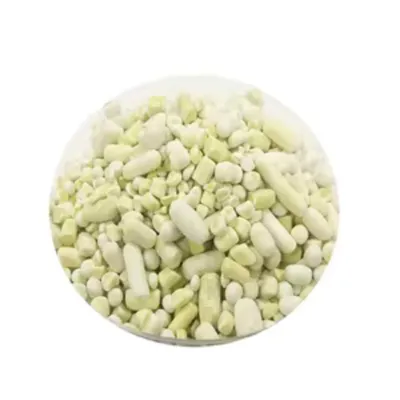
First, let’s ground ourselves in what flotation collectors do, because if you don’t know the job, the differences don’t matter. When you grind ore into a fine slurry, you end up with tiny particles of valuable metal sulfides (copper, lead, zinc, gold, silver) mixed with worthless gangue (silica, quartz, feldspar). To pull out the sulfides, you add a collector, which sticks only to the sulfide particles and makes their surface hydrophobic—water-fearing. Then you blow air through the slurry, and those hydrophobic particles cling to bubbles, float to the top of the tank, and get skimmed off as a concentrate. The collector is the glue that makes that interaction happen, and dithiocarbamates and xanthates are the two most common glues on the market today.
Let’s start with xanthates, since they’ve been around longer and are the old workhorse. Xanthates were first introduced in the 1920s, just as froth flotation was becoming the go-to method for sulfide mining. Their structure is simple: a carbon atom double-bonded to a sulfur, single-bonded to an oxygen, and single-bonded to an alkyl group (like ethyl, isopropyl, or butyl—hence the names ethyl xanthate, isopropyl xanthate). When xanthates dissolve in water, they split into two parts: a positively charged metal ion and a negatively charged xanthate ion, which is the actual collector. That xanthate ion binds to the surface of sulfide minerals—like copper pyrite (CuFeS₂) or sphalerite (ZnS) — through a process called chemisorption. The negatively charged sulfur on the xanthate grabs onto positively charged metal sites on the mineral surface, forming a stable, thin hydrophobic layer.
Xanthates are popular because they’re cheap, easy to handle, and super effective on the sulfides they’re designed for. If you’re working with a clean, well-characterized ore—say, a primary copper ore with almost no contaminants, consistent mineral grain size—xanthates will do the job reliably, and they’re the standard for 60% of sulfide flotation operations, in my experience. But here’s where the cracks start to show. Xanthates only bind well to a narrow range of sulfide minerals, and they hate competing for space on mineral surfaces with other chemicals. For example, if your ore has a lot of “floating” gangue minerals—like clay particles or oxidized iron—those will stick to xanthates too, contaminating your concentrate. Worse, xanthates break down pretty quickly in acidic slurry conditions (pH below 7), and if you’re processing ore that’s naturally acidic, or you have to adjust pH lower to suppress certain gangue, xanthates lose their effectiveness fast. I’ve had a mine in northern Minnesota call me last year, saying their xanthate use dropped 40% in the winter because the cold weather slowed the xanthate’s reaction rate—they were seeing less floatable concentrate, so they were burning through more chemical to make up for it.
Now let’s talk about dithiocarbamates, the product I supply, and the structure that makes them different. Dithiocarbamates’ molecular structure is similar to xanthates, but with one key swap: they replace that oxygen atom bonded to the carbon with another sulfur. So instead of C-O-S, it’s C-S-S. That might sound like a tiny change, but it’s the difference between a regular glue and a super glue that’s stronger, more versatile, and less picky about its surface. When DTC dissolves in water, it splits into a positively charged alkali metal ion (like sodium or potassium) and a negatively charged dithiocarbamate ion. That ion has two sulfur atoms instead of one, which means more points of contact with mineral surfaces, and a stronger, more stable bond when it binds.
Let’s get specific about how this plays out in real-world mining operations. First, mineral compatibility. Dithiocarbamates don’t just stick to the same sulfides xanthates do—they work on a much broader range, including complex sulfides like galena (PbS), chalcopyrite (CuFeS₂), and even precious metals like gold that are locked inside sulfide grains. More importantly, they bind strongly even when there are contaminants on the mineral surface—like oxidized iron or copper that can gum up xanthates. Last year, I worked with a zinc mine in Mexico that was struggling with lead contamination in their zinc concentrate. They were using xanthate, which was binding to both zinc and lead, so their concentrate was too impure to sell. We switched them to a mixed alkyl dithiocarbamate, and the lead content dropped by 85% in the first month, because the DTC selectively binds to zinc sites even when lead is present—something xanthates can’t do reliably.
Next, pH stability. That sulfur swap gives DTCs a much lower pKa (acid dissociation constant) than xanthates. What that means for operators is that DTCs stay intact and active in slurry down to a pH of 4, while xanthates start decomposing rapidly below pH 7. That’s a huge advantage for mines processing ore with natural acidity, or for operations that use sulfuric acid to suppress gangue minerals. I had a mine in Arizona that processes porphyry copper ore, which has high levels of pyrite (iron sulfide) that acidifies the slurry. They were using xanthate at a pH of 6, but they had to add extra lime to raise the pH and keep the xanthate working—adding lime costs them $12,000 a month in chemical and energy. Switching to DTC let them run at their natural pH of 4.5, cutting their lime costs in half, and their copper recovery went up 7% because the DTC was binding to more copper particles that the xanthate would have missed at that low pH.
Then there’s froth stability and selectivity, two things that make or recover. Xanthates tend to make froths that are too watery or too sticky, depending on the alkyl chain length. Short-chain xanthates (ethyl, methyl) make very stable froths but tend to carry over a lot of gangue, while long-chain xanthates (isobutyl, amyl) make drier froths but are less selective. Dithiocarbamates, because of their two-sulfur structure, create froths that are more consistent—stable enough to hold the valuable mineral particles, but not so sticky that they drag in unwanted gangue. That translates to higher grade concentrate: when froth is too wet, you have to reprocess it to remove gangue, wasting energy and time; when it’s too dry, valuable particles stick to the froth and don’t get recovered. A lead mine in Canada told me last quarter that switching to DTC reduced their froth cleaning cycles by two per batch, saving them 5 hours of processing time a week—enough to process an extra 12,000 tons of ore monthly.
But let’s not pretend DTCs are perfect. They’re not. The biggest downside is cost: DTC collectors are 20-30% more expensive per pound than standard xanthates. That’s a big number for mines that process 100,000 tons of ore a month and use 5,000 pounds of collector. The second downside is handling: some liquid DTC formulations are corrosive, and solid DTCs need to be handled carefully to avoid dust buildup, which can be a hazard in poorly ventilated plants. Xanthates, by contrast, are cheap, easy to mix, and have decades of safety data that mines already know and trust.
That’s the tradeoff I always lay out for customers: short-term cost vs. long-term recovery gains. When is DTC worth the extra money? If you’re dealing with complex ore, high contaminant levels, low pH slurry, or you’re struggling with low recovery or impure concentrate. When is xanthate still the right choice? If you have a simple, well-characterized ore, consistent operating conditions, and your current xanthate setup is working fine—there’s no reason to fix something that isn’t broken.
Over the years, I’ve seen too many mine managers jump on the “newer is better” hype and switch to DTCs without testing, only to find that their simple ore doesn’t need the extra selectivity, and the higher cost eats into their profit. I’ve also seen managers stick to xanthates for years, not realizing that a small switch in collector could add $50,000 a month to their bottom line by boosting recovery. That’s why I always recommend a bench test first—we ship free samples of DTC collectors to any mine, they test it on a small batch of their ore, and see for themselves if it moves the needle before committing to a full switch.
One of my favorite stories is from a small gold mine in Nevada that was losing gold because the gold particles were tiny and locked inside pyrite. They were using xanthate, which was binding to pyrite but not the gold—so the gold was getting left in the tailings. We sent them a dithiocarbamate designed for precious metals, and in their bench test, gold recovery jumped from 62% to 81%. They switched, and within three months, they were pulling an extra $120,000 worth of gold a month from the same ore they’d been processing for years. That’s the difference that structure makes. At the end of the day, flotation is a chemical process, and every tiny molecular change adds up to big results.
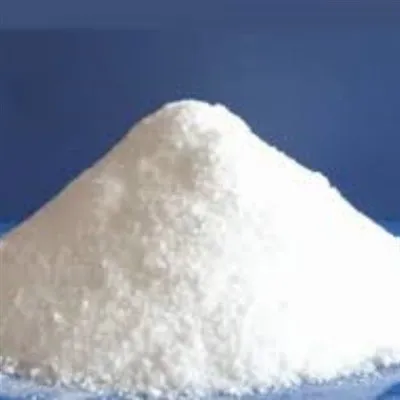
If you’re a flotation operator or mine manager looking to improve recovery, cut costs, or solve a persistent problem with your current collector, my team and I can help. We work with mines of all sizes, from small independent operations to large international mining companies, to test our dithiocarbamate collectors on your specific ore and tailor a solution that fits your process. There’s no obligation, no pushy sales pitch—just honest advice based on what works, not what’s most expensive. If you’ve been frustrated with xanthate performance, dealing with contaminated concentrate, or looking to boost your metal recovery, reach out and we can start a conversation.
Xanthate References
- Fuerstenau, D. W., & Han, K. N. (2003). Principles of Mineral Flotation. SME.
- Klimpel, R. R. (1990). Collector chemistry in sulfide flotation. International Journal of Mineral Processing.
- Leja, J. (1982). Surface Chemistry of Froth Flotation. Plenum Press.
- Wang, X., et al. (2018). Dithiocarbamate collectors: Structure-performance relationships for sulfide mineral flotation. Minerals Engineering.
Bitop Bihope Qingdao Mining Co., Ltd
Bitop Bihope Qingdao Mining Co., Ltd. is one of the most professional sulfur and nitrogen manufacturers and suppliers in China, featured by quality products and low price. Please rest assured to buy discount sulfur and nitrogen in stock here and get quotation from our factory. Customized orders are welcome.
Address: Room 410, 4th Floor, Shengquan Business Building, No. 263 Yitong Road, Huangdao District, Qingdao City, Shandong Province, China
E-mail: btbhmining@163.com
WebSite: https://www.btbhmining.com/
